Put in Blast: The Slang Phrase Explained
Wondering what put in blast means? Discover its origins, social media usage, and how it differs from put on blast with clear examples.
Put in blast is an informal variant of put on blast, meaning to publicly expose or shame someone, usually online. It's slang, not standard dictionary phrasing, and that's why people keep running into it in group chats, comments, and call-out posts.
Have you ever seen the phrase in a text thread and wondered why it sounds so familiar, yet so odd? That confusion makes sense, because the words look ordinary even when the idiom is doing something very specific.
Table of Contents
- Why You Keep Seeing This Phrase Online
- What Put in Blast Means
- The History Behind the Slang Evolution
- Is Put in Blast Just a Mistake
- Real World Examples of Usage
- How to Use This Slang with Confidence
Why You Keep Seeing This Phrase Online
A friend drops a screenshot into the chat, someone gets called out in the replies, and a comment says they were put in blast. The phrase lands like a warning shot because it usually means private behavior has been pushed into public view. Search a traditional dictionary, and you still will not find a neat entry that fully captures the internet meaning.
That gap helps the phrase spread. Social platforms reward short, punchy language, and slang often moves faster than reference books can catch up. If you want a broader vocabulary map for slang-heavy spaces, master everyday slang words can help, and a topic cluster guide for organizing slang and related ideas shows how related terms often travel together online.

Why the phrase feels so intense
The phrase does more than mean “mention” or “criticize.” It usually carries the force of exposure, as if someone took a private issue and pushed it into a crowded room. That is why it often appears in posts about screenshots, receipts, or social-media call-outs.
Practical rule: if the message sounds like public embarrassment, accountability, or a digital pile-on, you are probably hearing the right sense of the phrase.
A lot of readers first meet it in messy online drama, not in an idiom lesson. That context matters, because the phrase is tied to how people narrate conflict on platforms where an audience is always present. It sounds conversational, but it still does serious social work.
It also has a slightly slippery quality. People in one group chat may use it as if it matches put on blast exactly, while other speakers treat put in blast as a looser or more regional-sounding variant. That difference is small, but it matters if you are trying to read the tone before you repeat it yourself.
What Put in Blast Means
Put in blast means to publicly expose, criticize, or shame someone, usually by sharing private information, screenshots, or other evidence with a wide audience. In practice, it is a call-out phrase. It fits the kind of online accountability culture where a personal dispute becomes something the crowd can watch and judge.
How the phrase functions
The idiom works like a pressure release valve. A private event gets moved into public space, and the result is usually embarrassment, condemnation, or a demand for accountability. That is why it often appears beside words like receipts, screenshots, and exposed.
The phrase is tied to social media, not formal speech. People use it when they want to say someone was publicly dragged, not gently corrected. Tracking how slang migrates across platforms, like the shift from put on blast to put in blast, reveals patterns worth noting alongside master everyday slang words.
The core idea is exposure, not just criticism.
Why people confuse it
Part of the confusion comes from the word blast itself. In ordinary English, blast can mean an explosion, a loud noise, force, or criticism, so the idiom sits on top of a word with several unrelated senses. That overlap makes the phrase feel more standard than it is.
Readers also guess the phrase must be formal because it sounds grammatical. It is not. It is an informal slang construction, and its meaning comes from modern digital usage, not from a long-established fixed idiom. The variant put in blast may also carry a slightly regional or generational flavor for some speakers, which is one reason people notice it even when they already know put on blast. Once you separate the base word from the slang phrase, the meaning becomes much clearer.
The History Behind the Slang Evolution
The slang feels new because it is. The word blast itself is much older, but the public-shaming meaning in put on blast is a later informal development, not a centuries-old idiom.

From wind to explosion to verbal force
Etymological sources trace blast back to Old English blæst before the year 1000, where it meant a blowing or puff of wind. The explosion sense appears in the early 17th century, and the verb sense of blasting something with force is recorded in the mid-18th century. The jump from physical force to social force is easier to understand once you see that history.
That's the linguistic pattern here. English often turns concrete images into social metaphors, and this phrase follows that pattern neatly. A loud explosion becomes a way to describe a loud public takedown.
The modern slang sense is tied to public embarrassment and online visibility, which is why it feels so native to digital culture. The phrase didn't emerge from a courtroom, a classroom, or a formal style guide. It grew inside casual speech, then got reinforced by social media behavior and call-out culture.
Why that history matters
People often assume slang phrases are random. They aren't. They usually borrow older words and push them into newer social settings.
Language changes faster than reference books, especially when the internet turns private conflict into public content.
That's the best way to understand put in blast. The old word is physical, but the modern phrase is social. Its force comes from the fact that it turns embarrassment into something visible.
Is Put in Blast Just a Mistake
Most of the time, yes, put in blast is treated as a variant of put on blast, not as a separate standard phrase. The important point is that people do use it, and readers usually understand the intent, but dictionaries and slang references tend to treat it as a nonstandard form or a mistaken shortening.
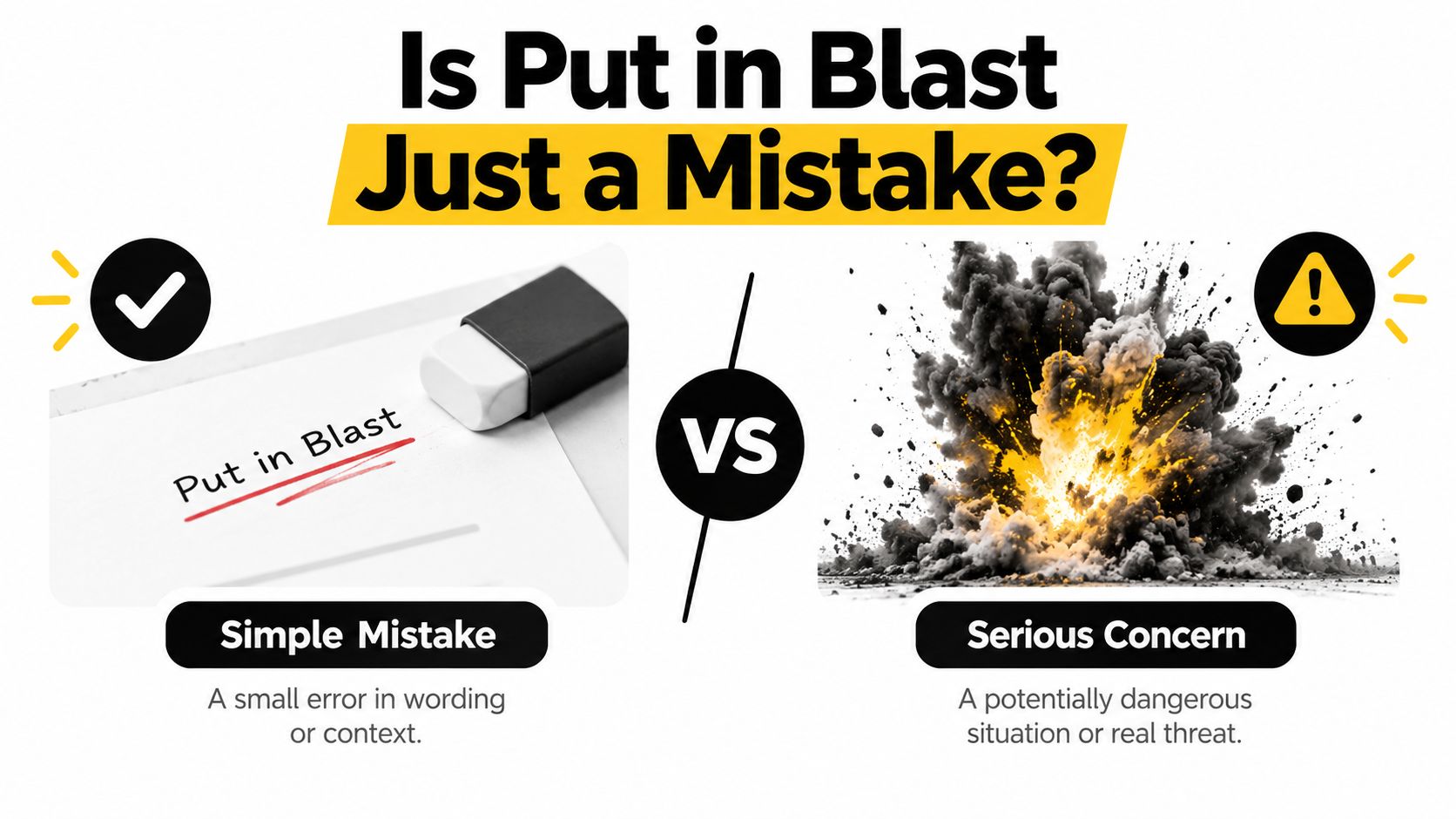
Side by side with the more common form
Put on blast is the better-established expression. It's the version widely recognized when they mean public criticism, exposure, or shaming. Put in blast often appears as a casual variation, especially in fast-moving digital conversation where precision takes a back seat to speed.
That doesn't mean every use is wrong. Language online is messy, and people copy phrases from posts, memes, and comment threads without checking whether the preposition is standard. Still, if you want the safest form in writing, put on blast is the clearer choice.
A good way to think about it is this, the phrase is understood because the social meaning is strong, not because the grammar is canonical. The idiom is informal, and its primary home is online conversation rather than formal English. The Free Dictionary's idiom coverage makes that distinction clear by separating the phrase from unrelated meanings of blast and by treating it as social-media driven usage in its blast idiom entry.
Why the confusion keeps spreading
General dictionaries list many unrelated senses of blast, so readers can land on explosion, noise, excitement, or criticism before they ever reach the slang idiom. That's why the search for put in blast can feel more uncertain than it should.
The practical answer is simple. If you hear it in a group chat, treat it as internet slang for public exposure or criticism. If you're writing for clarity, especially in a more formal setting, use the more familiar version and keep the tone controlled.
Real World Examples of Usage
A celebrity leaks a private message, and the reply thread says the person was put in blast for it. A coworker shares screenshots of a rude group chat, and the team starts using the phrase to describe the fallout. In both cases, the point is not the literal wording, it's the public nature of the exposure.
What the phrase sounds like in context
You'll usually hear it when someone wants to frame an event as public accountability rather than private gossip. That's an important distinction. The phrase can sound accusatory, defensive, or even celebratory, depending on who's speaking and who they support.
- In a group chat: “He got put in blast after the screenshots came out.” This tells you the conflict moved from private to public.
- Under a post: “She was put in blast for lying about the fundraiser.” This points to public criticism based on evidence.
- In workplace chatter: “They put him in blast after the email chain leaked.” This sounds less like slang trivia and more like reputational fallout.
If you're comparing how one piece of content gets reframed across platforms, a planning mindset helps. A phrase can be reused, clipped, and reshaped the same way content can be repurposed across formats, except here the “content” is social drama rather than a blog post.
How to read the tone
Tone is everything with this phrase. Sometimes it's pure criticism, sometimes it's a warning, and sometimes it's a way to describe what happened without endorsing it. The safest habit is to look at the audience first, because online crowd language usually reflects the speaker's stance.
Practical rule: if the phrase appears next to evidence, screenshots, or public replies, it usually signals exposure rather than a neutral description.
That's why the same phrase can feel harsh in one thread and matter-of-fact in another. The action is the same, but the speaker's attitude changes the meaning around it.
How to Use This Slang with Confidence
Use put in blast first as a signal of how people are speaking, then as a choice in your own writing. It tends to fit online call-outs, but it can sound sharper than you mean if you drop it into a casual conversation. Put on blast is still the more established form, so many writers will recognize that one faster.
A useful test is simple. Ask whether the moment is public, backed by evidence, and emotionally loaded. If those pieces are present, the phrase usually makes sense. If you are writing for a polished or professional setting, cleaner wording like exposed publicly, criticized openly, or called out is easier for readers to process.
The bigger point is tone, not memorized definition. Like checking the label on a package before opening it, you want to know what kind of message the phrase is carrying.
That is also where the slang feels interesting regionally or generationally. Some speakers use put in blast as a fresh variation, while others treat it as a near-match to put on blast. If you are tracking how internet idioms shift, a slang content audit can help you compare variants, note context, and keep your writing aligned with how people really speak.
Related Articles
Operational Plan Template: A Step-by-Step Guide
You're already feeling the drag if the plan lives in a spreadsheet, three people think they own...
Software7 Best Content Management Tools Ranked for 2026
Your content calendar lives in a shared spreadsheet, drafts are scattered across email threads, and...
Software24 Hour Schedule Template: Build a Full-Day Plan
A 24-hour schedule works when every shift has an owner, a status, and a next action. A paper calenda...
Comments (0)
No comments yet. Be the first to share your thoughts.