Editorial Workflow: From Idea to Published Without the Chaos
A simple pipeline that keeps content moving
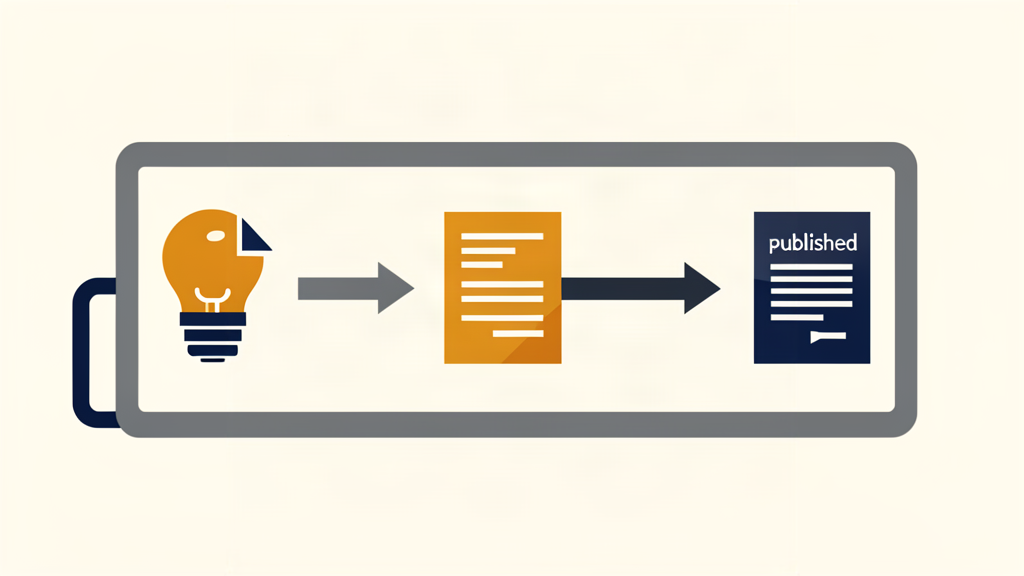
Content chaos has a familiar shape: drafts stuck in limbo, feedback that arrives late, pieces that were "nearly done" for weeks. None of it is caused by lazy people — it is caused by the absence of a defined workflow. A simple, explicit pipeline from idea to published removes most of that friction at a stroke.
Define the Stages and Keep Them Few
Start by naming the stages every piece moves through. For most teams, five is enough: idea, drafting, in review, scheduled, published. Each stage should have a clear meaning — everyone should know what "in review" actually requires. Resist the urge to add stages for every nuance. Complexity is where workflows go to die; a simple pipeline that everyone follows beats a sophisticated one that nobody does.
Give Every Stage an Owner
The most common cause of stalled content is a handoff with no clear owner. A draft moves to review and sits there because no one is specifically responsible for the next step. Fix this by assigning a named owner to every stage of every piece. When a draft is in review, someone specific owns reviewing it. When it is scheduled, someone owns hitting publish. Ambiguity is the enemy of momentum.
Set Turnaround Expectations
Stages without timeframes become bottlenecks. Agree rough turnaround times for the stages where things tend to stall — especially review. Knowing that a review should come back within two working days changes behaviour and surfaces blockers early. These do not need to be rigid SLAs; they are shared expectations that keep work moving and make delays visible.
Make the Pipeline Visible
A workflow only works if everyone can see it. Whether you use a simple board or a planning tool, the state of every piece should be visible at a glance — what is drafting, what is in review, what is blocked. Visibility does two things: it lets anyone answer "where is that piece?" instantly, and it makes stuck items obvious so they get unstuck. Hidden work is delayed work.
Review the Workflow Itself
Finally, treat the workflow as a thing that can be improved. Every few weeks, ask what is causing friction: a stage that always backs up, a handoff that keeps failing, a step that adds no value. Small adjustments to the process compound into large gains in output and calm. The goal is a pipeline so smooth that publishing feels routine rather than heroic.
Frequently asked questions
What is an editorial workflow?
What stages should an editorial workflow have?
Where do content workflows usually break down?
Do small teams need an editorial workflow?
Sources and further reading
Related Articles
How to Build an Editorial Calendar That Actually Gets Used
Every content team has started an editorial calendar. Most have also watched one die. The spreadshee...
Editorial PlanningContent Planning for Small Teams: A Practical System
Content advice is usually written for teams with strategists, editors, and a bench of writers. Small...
Editorial PlanningHow to Set a Publishing Cadence You Can Sustain
Ask how often you should publish and you will get answers ranging from daily to monthly. The honest...
Comments (0)
No comments yet. Be the first to share your thoughts.